
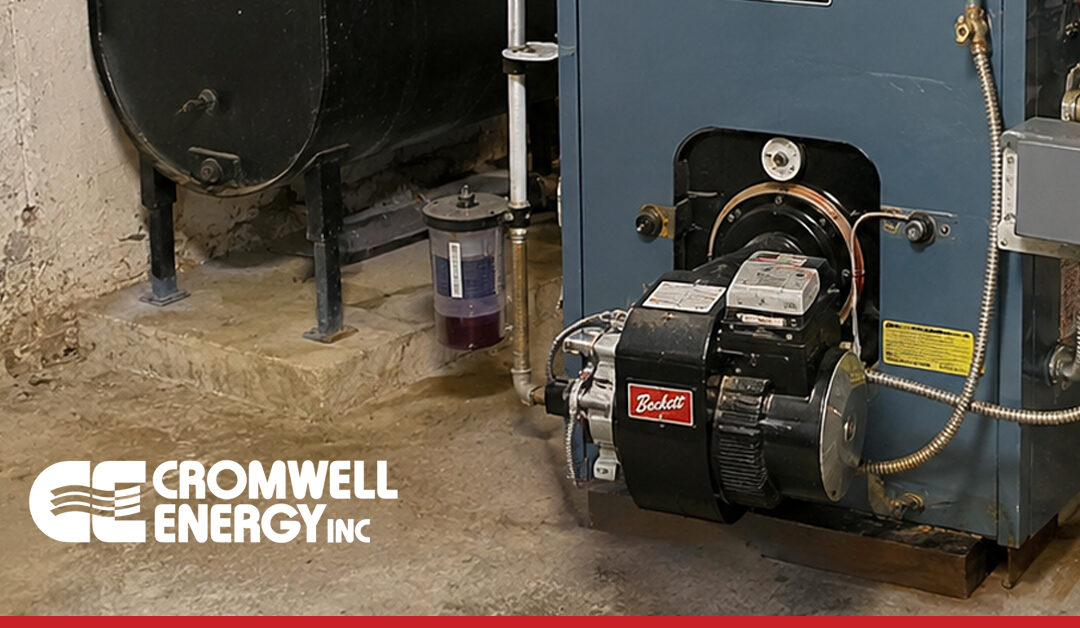
For Connecticut homeowners, a dependable boiler can be one of the most important systems in the house. When winter temperatures arrive, your boiler may run day after day for months at a time to keep your home comfortable.
But boilers don’t last forever. If your system is getting older, requiring more frequent repairs, or struggling to keep up with your heating needs, you may be wondering: How long do boilers typically last in Connecticut?
Most residential boilers can be expected to last approximately 15 to 20 years, although the actual lifespan varies significantly depending on the type of boiler, how heavily it is used, the quality of its installation, and how consistently it has been maintained. Some boilers can operate well beyond 20 years, while others may begin experiencing significant problems closer to the 10- to 15-year mark.
Understanding where your boiler falls within that range can help you plan ahead instead of facing an unexpected system failure during a cold Connecticut winter.
Quick Highlights
- Most residential boilers last approximately 15 to 20 years with proper installation and regular maintenance.
- Boiler type matters. Some cast-iron boilers can operate for 20 to 30 years or longer, while certain modern gas or high-efficiency systems may require replacement sooner.
- Connecticut’s long heating season can put significant demand on a boiler, increasing annual runtime compared with homes in milder climates.
- Annual professional maintenance is one of the best ways to protect your boiler and identify small problems before they become major repairs.
- Warning signs of an aging boiler include frequent breakdowns, rising heating costs, leaks, unusual noises, uneven heating, and difficulty maintaining your thermostat setting.
- A boiler does not necessarily need to be replaced simply because it reaches a certain age. Its condition, efficiency, repair history, and reliability should all be considered.
- If your boiler is approaching 15 to 20 years old, it is a good idea to begin planning and budgeting for eventual replacement before an emergency occurs.
What Is the Average Lifespan of a Boiler?
There is no single expiration date for every boiler.
As a general guideline, manufacturers and heating professionals commonly place the useful lifespan of residential boilers somewhere around 15 to 20 years. Viessmann, for example, notes that a typical boiler can be expected to last approximately 15 to 20 years, although good maintenance can extend that lifespan.
The type of boiler makes a difference as well.
Cast-Iron Boilers
Traditional cast-iron boilers are known for their durability. Depending on their condition and maintenance history, some can continue operating for 20 to 30 years or longer. Viessmann notes that cast-iron boilers can often reach this range.
A boiler still operating at 25 or 30 years old, however, isn’t necessarily operating economically. Older equipment may be considerably less efficient than modern systems, and parts may become increasingly difficult or expensive to replace.
Gas Boilers
Modern gas boilers often have somewhat shorter expected lifespans. Lennox estimates that gas boilers typically last approximately 10 to 15 years with consistent maintenance, although individual systems can certainly last longer.
Oil Boilers
Oil boilers can be especially durable when they are properly maintained. Lennox estimates that oil-fired boilers may last up to approximately 20 years with consistent maintenance.
Because soot and combustion deposits can reduce heat transfer and efficiency in oil-fired equipment, routine cleaning and professional maintenance are particularly important.
High-Efficiency and Condensing Boilers
High-efficiency condensing boilers are designed to capture more usable heat from the combustion process, potentially reducing the amount of fuel needed to heat a home.
However, these systems also contain sophisticated controls and components that need proper installation and maintenance. Depending on the boiler, installation, water quality, maintenance history, and operating conditions, homeowners may begin evaluating replacement options when a high-efficiency system reaches roughly the 10- to 15-year range.
Age alone should not dictate the decision. A well-maintained system that is operating reliably and efficiently may have years of useful service remaining.
Why Connecticut’s Climate Matters
Where you live can influence how quickly heating equipment accumulates wear.
Connecticut homeowners typically depend heavily on their heating systems from fall through early spring. During especially cold stretches, a boiler may cycle frequently throughout the day and night.
That means a boiler in Connecticut can accumulate considerable operating hours over its lifetime.
Think of it similarly to mileage on a vehicle. Two boilers installed during the same year may technically be the same age, but a boiler operating through long New England winters may accumulate considerably more runtime than one installed in a warmer climate.
That does not mean Connecticut boilers are destined for shorter lives. It simply makes proper installation, annual maintenance, and timely repairs especially important.
What Determines How Long Your Boiler Will Last?
Boiler age is only one part of the equation. Several factors can have a substantial impact on how many years you get from your system.
1. Installation Quality
A properly sized and installed boiler should operate more efficiently and experience less unnecessary stress.
If a boiler is oversized or undersized for the home, poorly configured, or improperly installed, it may cycle excessively or operate inefficiently. Over many heating seasons, that additional strain can contribute to premature wear.
2. Regular Maintenance
Routine professional maintenance is one of the most important things you can do for boiler longevity.
A qualified technician can inspect components, identify leaks or corrosion, check safety and operating controls, examine venting and combustion systems, and address minor issues before they become expensive problems.
Weil-McLain recommends professional boiler inspections at least annually.
Cromwell Energy also offers annual boiler maintenance that includes a comprehensive system tune-up and safety check to help keep equipment operating safely and efficiently.
3. How Hard the Boiler Works
Homes with substantial heating demands naturally require their boilers to work harder.
Your home’s insulation, air sealing, thermostat settings, square footage, heating zones, and overall energy efficiency can all affect how frequently the boiler needs to operate.
Reducing unnecessary heat loss throughout your house may not only improve comfort but also reduce some of the workload placed on your heating system.
4. Water Quality and System Condition
A boiler is part of a larger hydronic heating system.
Corrosion, sediment, mineral buildup, air within the system, improper water pressure, and other conditions can place additional stress on the boiler, circulators, valves, piping, and heat exchanger.
This is another reason professional inspections are valuable: the boiler itself may not always be the source of a developing heating problem.
5. How Quickly Problems Are Repaired
Small problems rarely improve on their own.
Leaks, strange noises, pressure fluctuations, ignition issues, and inconsistent heating should be evaluated rather than ignored. Addressing problems early may prevent damage to additional components and potentially extend the useful life of the system.
7 Signs Your Boiler May Be Nearing the End of Its Life
An older boiler doesn’t automatically need to be replaced. Likewise, a relatively young boiler can develop problems serious enough to make replacement worth considering.
The key is looking at the system as a whole.
Here are some common warning signs.
1. Your Boiler Is 15 to 20+ Years Old
Once a boiler reaches approximately 15 years old, it makes sense to pay closer attention to its condition and start planning for the possibility of replacement.
You don’t necessarily need to replace a perfectly functional boiler on its 15th birthday. But you also don’t want to wait until a 20-year-old system suddenly fails during the coldest weekend of January.
2. Repairs Are Becoming More Frequent
An occasional repair does not necessarily justify replacing an entire boiler.
But if you’re calling for service repeatedly, the economics begin to change.
Instead of continuing to invest money into an aging system, those repair costs may be better put toward new equipment that can provide greater reliability for years to come.
3. Your Heating Costs Are Increasing
Higher heating bills can have many causes, including changing fuel prices and weather conditions.
But if your fuel usage is steadily increasing without another obvious explanation, your boiler may no longer be operating as efficiently as it once did.
Rising energy expenses can be one warning sign that an aging boiler deserves professional evaluation.
4. You Notice Leaks or Corrosion
Water around the boiler or nearby piping should never simply be ignored.
A small leak could be associated with a repairable component, while significant corrosion or deterioration of the boiler itself may be a much bigger concern.
5. Your Boiler Makes New or Unusual Noises
Boilers aren’t always silent, but homeowners generally become familiar with the normal sounds of their heating systems.
New banging, gurgling, rumbling, rattling, or other unusual sounds warrant attention.
These symptoms do not automatically mean the boiler needs to be replaced, but they are reasons to have the system professionally evaluated.
6. Your Home Isn’t Heating Evenly
Are some rooms suddenly much warmer or colder than others?
Is your boiler running frequently but struggling to reach your thermostat setting?
Problems maintaining consistent indoor temperatures may indicate an issue with the boiler, controls, circulators, heating zones, or another part of the system.
7. Replacement Parts Are Becoming Difficult to Find
As equipment ages, certain parts can become harder or more expensive to source.
Eventually, even an otherwise repairable problem can become impractical if the necessary components are obsolete or the repair cost represents a substantial portion of the cost of replacement.
Should You Repair or Replace an Older Boiler?
There isn’t a universal rule for deciding between repair and replacement.
Instead, consider several questions together:
- How old is the boiler?
- How reliable has it been over the past few heating seasons?
- How much will the current repair cost?
- Have repair costs been increasing?
- Are replacement parts readily available?
- Is the boiler heating the home comfortably?
- Has fuel consumption increased?
- How efficient is the existing system compared with newer equipment?
For example, repairing a 9-year-old boiler with a relatively minor problem can make perfect sense.
Putting another expensive repair into a 25-year-old boiler that has already broken down several times may be a different story.
A professional heating technician can evaluate the equipment and help you understand the condition of your existing system before you decide.
Can a New Boiler Reduce Heating Costs?
Potentially, yes.
Heating technology has improved considerably, and replacing an older, inefficient boiler with appropriately sized modern equipment may reduce fuel consumption.
The amount a homeowner saves depends on factors including the efficiency and condition of the existing boiler, the replacement system, fuel type, thermostat settings, home insulation, outdoor temperatures, and household heating habits.
Efficiency is also only one benefit of replacement.
A new boiler can provide greater reliability, more consistent comfort, modern controls, quieter operation, and the peace of mind that comes from reducing the risk of an unexpected winter breakdown.
How Can You Make Your Boiler Last Longer?
You can’t prevent every mechanical failure, but good preventive care can help maximize the life of your boiler.
The most important step is to schedule professional maintenance annually, ideally before the heaviest portion of Connecticut’s heating season.
You should also pay attention to changes in your system rather than waiting for the boiler to stop working entirely. Contact a heating professional if you notice:
- Water around your boiler or heating system
- Unexplained pressure changes
- Unusual noises
- Heating zones that aren’t warming properly
- Frequent shutdowns or error codes
- Difficulty maintaining your thermostat setting
- An unexplained change in heating costs
Catching a developing issue early may turn what could have become a major breakdown into a much more manageable repair.
Don’t Wait for Your Boiler to Fail in the Middle of Winter
The best time to think about replacing your boiler usually isn’t after it has stopped working on one of Connecticut’s coldest nights.
If your system is approaching or exceeding the 15- to 20-year range, have it evaluated before heating season gets into full swing. Even if replacement isn’t necessary yet, knowing the condition of your equipment allows you to plan and budget for the future.
And if your boiler still has plenty of life left, regular maintenance can help keep it operating safely, reliably, and efficiently.
Boiler Repair, Maintenance & Replacement in Connecticut
Whether your boiler needs a routine tune-up, a repair, or you’re considering upgrading an aging heating system, Cromwell Energy can help.
Cromwell Energy provides boiler installation, repair, and maintenance services for homeowners throughout Middlesex and Hartford Counties, working with oil, natural gas, and propane heating systems. Our experienced technicians can evaluate your existing equipment and help you determine the right approach for keeping your home warm and comfortable.
Don’t wait for an aging boiler to turn into an emergency in the middle of winter. Contact Cromwell Energy today to schedule boiler service or discuss your heating system replacement options.